
Mustafa Akyol
Mustafa Akyol is a senior fellow at the Cato Institute’s Center for Global Liberty and Prosperity.
More About this Author
Mustafa Akyol is a senior fellow at the Cato Institute’s Center for Global Liberty and Prosperity.
More About this Author
Mustafa Akyol is a senior fellow at the Cato Institute’s Center for Global Liberty and Prosperity.
More About this Author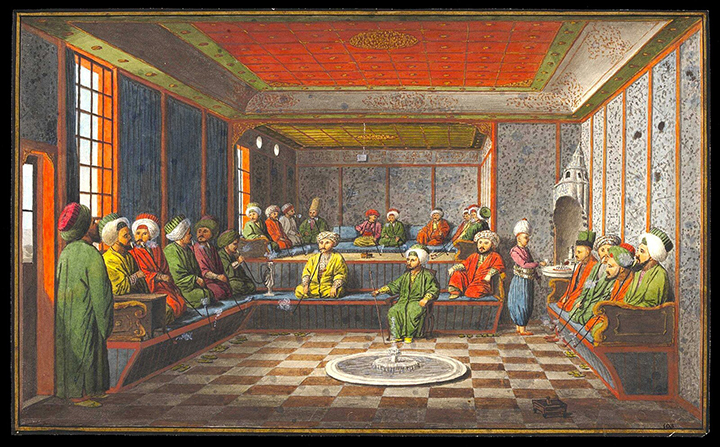
Turkish coffeehouse, ca. 1809
God preserve us from those who show fanaticism in religion. —Ottoman Scholar Taşköprülüzâde Ahmed (d. 1561)1
The seventeenth century was a turbulent era for the Ottoman Empire, the Muslim superpower that held the caliphate and controlled much of what we today call the Middle East. In the previous century, the empire had reached the zenith of its power, especially during the victorious reign of Sultan Süleyman the Magnificent (r. 1520–66), extending its western borders all the way to Vienna. Soon afterward, however, a long period of stagnation began, tainted by external setbacks and internal rebellions.
No wonder, then, that in that century, some Ottoman scholars began to ponder what had gone wrong and what needed to be fixed. One of them was Koçi Bey (d. 1650), a high-ranking bureaucrat who submitted critical reports to two subsequent sultans pointing out serious problems, such as corruption in the military, bribery in the bureaucracy, nepotism among religious scholars, and a heavy yet inefficient system of taxation. Another scholar, the polymath Kâtip Çelebi (d. 1657), probably the most important Ottoman intellectual of his century, also criticized some narrow-minded religious scholars of his time who “rejected and repudiated… what they called ‘the philosophical sciences,’” such as geometry and astronomy.2 In his remarkable book Mîzânü’l-Hakk, or The Balance of Truth, he wrote that Muslims had initially been hungry for all knowledge, which is why they had translated and studied “sciences of the ancients,” especially the Greek philosophers. However, Kâtip Çelebi lamented, a latter-day dogmatism had ended this openness and led to the “denial of science which is so prevalent among the people.”3
Both of these scholars—still remembered and respected in Turkey today—called for military and administrative reforms, or islāĥāt, to plant the seeds of much greater reforms that the empire could pursue in the next two centuries. However, another Ottoman movement concerned with the empire’s decline also emerged in the seventeenth century—but it found the culprit, and a solution, in a very different direction.
Adherents of this religious movement, called the Kadızâdelis (meaning “Kadızâde-ites”), took their name from Kadızâde Mehmed (d. 1635), an Anatolian preacher whose fiery sermons brought him much popularity and preaching positions in Istanbul’s greatest mosques, including the majestic Hagia Sophia. He was a disciple of Mehmed Birgivî (d. 1573), a prominent Ottoman scholar of hadith and jurisprudence known for his strict views, who was himself influenced by the famous Ibn Taymiyyah (d. 1263), a scholar highly revered by the modern Salafi movement.4 Because of these doctrinal links and other similarities, Kadızâdelis have been compared with Wahhabis—adherents of a religious movement that would emerge a century later on the Arabian Peninsula, which was similarly characterized by its zeal to “purify” Islam by imposing its stern version on all Muslims it could reach and later spreading its teachings globally. Hence, some historians see the Kadızâdelis as “proto-Wahhabis.”5
As noted, the Kadızâdelis were also concerned with the decline of the Ottoman Empire. But unlike Koçi Bey and Kâtip Çelebi, they tied the problem to something very peculiar: the spread of bid‘ah, a religious term that literally means “innovation,” but only in the pejorative sense of deviation from the established truth. In their view, the Qur’an and the sunnah, the normative example of the Prophet Muhammad ﷺ, had given Muslims all the wisdom they needed, making any “innovation” tantamount to heresy. The eradication of all heresy, they also believed, would restore the empire’s golden days.
What were these heresies that bothered the Kadızâdelis? They had a long list of bid‘ah. At the top of that list were popular Sufi practices such as singing, rhythmic chanting, and whirling. Visiting shrines of saints, another Sufi practice, was also a heresy, if not outright infidelity. Kadızâdeli preachers fiercely condemned these practices from mosque pulpits, finding many ears among the common people, including “poor medrese students and humble tradesmen.”6 They also saw a direct link between Sufism and the empire’s misfortunes. In 1655, when a Venetian armada blockaded the Dardanelles—a shocking sign of Ottoman naval weakness—Kadızâdelis claimed that this represented a divine punishment for the official support given to Sufi orders by the Ottoman state.7 Sufis, in return, called the Kadızâdelis ehl-i taʻassub, or “people of bigotry.”8
The two other important bidʻah reviled by the Kadızâdelis were drinking coffee and smoking tobacco, both novelties in Ottoman society. Drinking coffee had originated centuries earlier in Ethiopia and Yemen, but it became popular across the Ottoman Empire only in the mid-sixteenth century, later spreading to Europe. (The English word “coffee” comes from the Arabic qahwah through the Turkish kahve.) In contrast, tobacco originated in the Americas, from which it spread to Europe and then to the Ottoman Empire, again in the mid-sixteenth century. At this time, coffeehouses, where tobacco was also widely available, became wildly popular in Ottoman cities, creating a new public space but also religious controversy. Authorities prohibited coffee in Mecca in 1511, and some (but not all) religious scholars condemned both of these novel delights as impermissible intoxicants. Among them was Ottoman jurist Ahmad al-Rûmî al-Aqhisarî (d. 1632), who denounced tobacco, a “substance that originated from the infidels,” as haram, while also disparaging coffee, whose public consumption “violates manliness” and makes one “mingle with the fools and the vile.”9 Kadızâdelis embraced these strict views and added both coffee and tobacco consumption to their list of heresies.
Kadızâdelis even condemned certain table manners, such as using cutlery, as innovations, because they believed that eating food with bare hands constituted part of the Prophet’s sunnah (whereas one could object that cutlery was just unavailable in the Prophet’s time and milieu). In a reported episode, a Kadızâdeli preacher named Türk Ahmed was asked, “Using spoons is an innovation, so what is your take on that?” He replied, “Let people eat food with their hands.” Then he was asked, “But what should the spoon makers do?” He replied, “Let them find another job.”10
Unsurprisingly, the Kadızâdelis also opposed the “philosophical sciences” that intellectuals such as Kâtip Çelebi sought to revive.11 Hence they demanded “the abolition of mathematics and the intellectual sciences from the medreses.”12 They even wanted to tear down multiple minarets in Istanbul’s majestic imperial mosques because they believed that the sunnah required having just one minaret, while building additional ones was a bid‘ah.13
Now, here is the key point that makes this Ottoman episode relevant to discussions in the contemporary Muslim world about freedom versus compulsion in religion: the Kadızâdelis did not merely preach against what they perceived as heresy; they also wanted to eradicate all heresy by force. The main preacher of the group, Kadızâde Mehmed, “asked of his adherents not only that they purify their own lives, but that they seek out sinners and in effect force them back onto ‘the straight path.’”14 This forcing back would be carried out by any means necessary, regardless of what other Muslims thought and believed.
Unsurprisingly, the Kadızâdeli movement wreaked major disruption in Ottoman society from the early 1630s to the late 1680s.15 Convinced that all bid‘ah must be forcefully eradicated, Kadızâdeli mobs began raiding mosques, Sufi lodges, and coffeehouses to “mete out punishments to those contravening their version of orthodoxy.”16 As described by a contemporary Turkish historian:
They raided dervish lodges, harassed sheikhs, and caused the deaths of some dervishes. They threatened [the top jurist] Sheikh al-Islam Baha’i Efendi, a member of a Sufi order, forcing him to issue a fatwa declaring devran [Sufi whirling] unlawful. They sent a letter to the sheikh of the [Sufi] Sivasi lodge, stating that they would raid the lodge, kill him and his disciples, destroy the lodge to its foundations, and scatter its soil into the sea, declaring that prayers would not be performed there until this was done.17
As one can imagine, the Kadızâdelis did not tolerate criticism. When two members of the Sufi Halvetî order wrote refutations of their main texts, they appealed to the top jurist and the sultan to have the offenders executed. Frightened by the threat, one of the authors disowned his manuscript, while the other one fled Istanbul.18
Kadızâdeli activism escalated when Sultan Murad IV (r. 1623–40) partly embraced their teachings toward the end of his reign. Threatened by insubordinate soldiers and palace conspiracies, the young Murad, crowned when he was only eleven years old, was a paranoid ruler who executed some of his own officials and ruthlessly suppressed dissent. He was lenient toward the Sufi orders, but another target of the Kadızâdelis, coffeehouses, concerned him because they were places where subversive ideas could spread. Therefore, in early 1633, the sultan, also infuriated by a major fire in Istanbul, followed the Kadızâdeli calls to outlaw coffee and tobacco across the Ottoman Empire. In a few days, hundreds of coffeehouses in the capital were demolished. Criers in the streets announced that smoking tobacco and drinking coffee were now such major offenses that violators would be immediately put to death.
The sultan also prohibited drinking wine, which had always been banned for Muslims, but with limited enforcement. Non-Muslim communities within the empire had been customarily allowed to produce and sell wine, and the taverns in their neighborhoods sometimes had Muslim customers as well, but Kadızâdeli preachers convinced Sultan Murad IV to demolish all taverns in Istanbul.
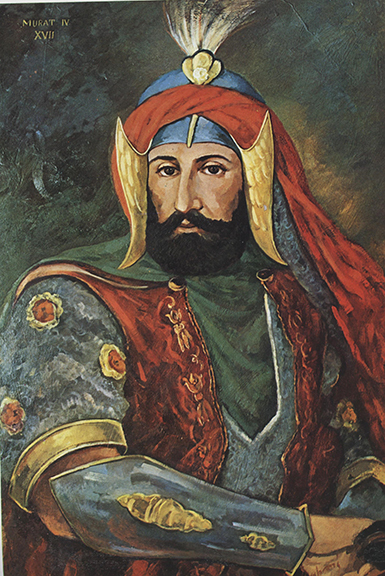
Sultan Murad IV
Despite these severe bans imposed by Sultan Murad IV, many Ottomans refused to give up what they enjoyed, as we learn from Kâtip Çelebi:
People being undeterred, the imperial anger necessitated the chastisement of those who, by smoking, committed the sin of disobedience to the imperial command. Gradually His Majesty’s severity in suppression increased, and so did people’s desire to smoke, in accordance with the saying, “Men desire what is forbidden,” and many thousands of men were sent to the abode of nothingness.19
Those unfortunate deportees to “the abode of nothingness” suffered terrible methods of execution, including hanging, dismemberment, and impalement.20 The sultan also sent out secret police to find violators, and he even began personally touring the city at night, incognito, to punish those who indulged in coffee, tobacco, or wine. Stories abound of people during this era joking about whether the mighty sultan was near them, only to chillingly discover that he really was. The next morning, pedestrians would find their decapitated bodies in the streets.
Yet again, these brutal bans did not change much about Ottoman society and its habits. Kâtip Çelebi stresses this point, relating an episode from Sultan Murad IV’s military expedition to Baghdad in 1638:
At one halting-place fifteen or twenty leading men of the army were arrested on a charge of smoking, and were put to death with the severest torture in the imperial presence. Some of the soldiers carried short pipes in their sleeves, some in their pockets, and they found an opportunity to smoke even during the executions. Even during this rigorous prohibition, the number of smokers exceeded that of the non-smokers.21
Ironically, the same Sultan Murad IV who would execute anyone for their harmless pleasures was himself a heavy wine drinker, which caused his premature death in 1640, at the age of twenty-seven.22 Afterward, the imperial policy on coffee and tobacco gradually became more lenient, and coffeehouses became popular again, never to disappear.
For a few more decades, however, the Kadızâdelis kept campaigning zealously against bid‘ah and trying to eradicate as many as they could. The movement’s ultimate decline came only after it dragged the Ottoman Empire into a historic disaster: the second Siege of Vienna (1683), which was launched with much confidence and bravado only to end in a catastrophic military defeat that pushed the empire further into decline. The campaign was incited by Vanî Mehmed Efendi (d. 1685), the last great preacher of the Kadızâdelis, who had risen to a position of influence over the sultan and the grand vizier, convincing them that victory was inevitable thanks to prayers, piety, and the renewed campaigns against bid‘ah that he had helped inflame within the empire.23 After the crushing defeat, however, Vanî Mehmed Efendi was dismissed and banished, as “no one could any longer stomach his goading to jihad or his harsh criticism of contemporary Muslim practices.”24
That moment also marked the waning of the Kadızâdeli movement, which finally lost its grip on the Ottoman state toward the end of the seventeenth century. Over the next two centuries, most of the Ottoman ruling elite would see the empire’s salvation not in eradicating bid‘ah but in embracing much-delayed innovations, such as military reforms, the printing press, and many other European inventions, sciences, and institutions. While these reforms would bring significant improvements, the empire would never fully overcome the disadvantage of its late start in modernization.
Today, most Muslims cannot even imagine being brutally punished for sipping their coffee. Yet this was a nightmare the Kadızâdelis imposed on Ottoman society in the seventeenth century. How they did this deserves a closer look, as their arguments remain relevant to contemporary debates.
The key scriptural basis the Kadızâdelis claimed was the Qur’anic concept of al-amr bi-l-ma‘rūf wa-l-nahy ‘an al-munkar, or “commanding the right and forbidding the wrong,” which is defined in eight separate verses in the Qur’an as a religious duty that God has decreed for Muslims.25 One of these verses even calls for a specific group to carry out the duty: “Let there be a group among you who call others to goodness, encourage what is good, and forbid what is evil; it is they who will be successful” (3:104). This is why religious police forces in parts of the contemporary Muslim world, from Afghanistan to Saudi Arabia, define themselves as ministries for “commanding the right and forbidding the wrong.”
Historically, too, commanding the right (as we will call this duty) has been a central concept in Muslim societies. In relation to jihad, which has been defined as the duty to protect Islam from external threats, commanding the right has been conceived as the duty to keep internal affairs in order.26
However, as with jihad, precisely how to carry out the duty of commanding the right matters significantly. The Qur’an does not provide specific details, so interpretations of this duty have varied throughout history. It could mean merely preaching the tenets of Islam or defending them intellectually against critics. Or it could mean speaking up against a tyrannical ruler, or even launching a rebellion.27 But it could also mean that every aspect of religion—from correct action to correct belief—should be enforced by officially appointed police forces or ordinary Muslims.28 This last interpretation opened the way to religious coercion, and the Kadızâdelis demonstrated how far it could go, terrorizing a whole Muslim society.
But did the Ottomans also have good religious arguments against religious coercion?
Yes, and we find them in the writings of another prominent religious scholar of that era, ‘Abd al-Ghanī al-Nābulsī (d. 1731). Born into a scholarly family from Nablus, Palestine (as his attributive name shows), he was a religious teacher who followed Hanafi jurisprudence, Māturīdī theology, and the Sufi orders of the Qādiriyyah and the Naqshbandiyyah. He lived in Damascus, then an Ottoman city and the biggest Kadızâdeli stronghold after Istanbul. Hence, al-Nābulsī felt the need to respond to the Kadızâdelis’ militancy, but not with his own militancy. Instead, he tried to extinguish the flames with arguments of moderation, as seen in the title of a book he wrote against the harsh bans on tobacco: Al-Śulĥ bayn al-ikhwān fī ĥukm ibāĥat al-dukhān, or “Making peace between brothers on the issue of legalizing smoking.”29
Even more important was his response to the key text of the Kadızâdeli movement: Birgivî’s Al-Ţarīqah al-Muĥammadiyyah, or “Muhammadan way.” Al-Nābulsī wrote a five-volume critical commentary on this text, completed in 1682, with the innocuous title Al-Ĥadīqah al-nadiyyah, or “The dew-moistened garden.” In this book, he discussed many controversies of his time, but we will focus on his arguments against compulsion in religion, as they are highly original and timelessly relevant.
In his commentary, al-Nābulsī first stressed the difference between the Qur’anic duty of commanding the right and ĥisbah. The latter is an Arabic word that literally means “accountability,” but it often refers to official inspectors in traditional Islamic societies—also called muĥtasib, or “those who carry out ĥisbah.” According to Muslim historiography, the first ĥisbah mission was established by none other than the Prophet Muhammad ﷺ, but this mission aimed to prevent fraud in the Medina market, not to enforce a religious practice.30 Yet over time, enforcing religious practice became a key feature of ĥisbah. Meanwhile, many scholars saw ĥisbah as the main vehicle for commanding the right, often conflating the two concepts.
Yet al-Nābulsī insisted that the two concepts required separation: while ĥisbah was clearly a police function, commanding the right about religious matters was “purely a matter of the tongue.”31 It was, in other words, limited to advice and preaching. Moreover, people had the right to discard this preaching, as al-Nābulsī argued by referring to Qur’anic verses:
In summary, “commanding the right and forbidding the wrong” refers to the tongue, and it is the truthful opinion. As God Almighty said: “And say, ‘Truth is from your Lord. Whoever wants, let him believe and whoever wants, let him disbelieve’” [18:29]. The meaning of this verse is not to force people to obey the command and avoid the prohibition. That is why God Almighty said to His Prophet, whom He sent to deliver the command and prohibition: “Do you want to coerce people until they become believers?” [10:99]. And God Almighty said: “No compulsion in religion” [2:256].32
This passage by al-Nābulsī is remarkable because it refers to key Qur’anic verses about freedom of religion to reject coercion in Islam, whereas most traditional scholars did not interpret these verses in this way.33 Some scholars considered them “abrogated” by later verses that command armed struggle (though in a specific context). Many others opted not for abrogation but for limitation: they thought that the linguistically categorical maxim “There is no compulsion in religion” (2:256) only ruled out forced conversions into Islam—allowing Jews, Christians, and other communities to preserve their religions under Muslim rule. This represented a remarkable act of tolerance toward non-Muslims, but the same tolerance was not conceptually extended to perceived apostasy, heresy, or impiety among Muslims.34
Some modern-day translations of Qur’an 2:256 that preserve this traditional view still insert “explanations” into the verse, such as the following:
There shall be no compulsion in [acceptance of] the religion.35
There shall be no compulsion in religion [in becoming a Muslim].36
The unmistakable implication of these translations is that there is “no compulsion” only until one becomes a Muslim. Some preachers stress the same point by arguing that the sentence “there is no compulsion in religion” actually means “there is no compulsion to religion.”37
Al-Nābulsī, however, called for no compulsion in religion as well. In his time and milieu, this implied that the Kadızâdelis, or other Muslims who favored religious coercion, had the right to preach their doctrines but not to enforce them. They simply did not have the right to make people “obey the command and avoid the prohibition.”
Moreover, al-Nābulsī did not stop there: he took on the Kadızâdelis’ claim to piety, questioning their real intentions. Such zealots typically claimed to be the most pious Muslims, with the purest intentions to serve God and His religion. But al-Nābulsī saw in them an urge to elevate themselves, with impure motives such as “boastfulness, seeking fame and self-praise, harboring personal grudges, despising others, satisfying their own ego by looking down on them, seeking superiority through that action, aspiring to leadership over people, desiring others to turn their attention to them, and absolving themselves of any association with that wrongdoing.”38 Religious coercion, in other words, could simply be an “ego trip” of the self-righteous, not a real service to religion itself. What Muslims really needed was “less self-righteousness and more self-knowledge.”39 Following the same line of reasoning, in a letter penned in 1699, al-Nābulsī advised his correspondent against “busying himself with judging others”40 and reminded him of another important Qur’anic verse:
You who believe, you are responsible for your own souls; if anyone else goes astray it will not harm you so long as you follow the guidance; you will all return to God, and He will make you realize what you have done. (5:105)
This reference to the Qur’an is also remarkable because many traditional scholars took pains to ensure that their interpretations of this verse did not prevent Muslims from fulfilling the duty of commanding the right.41 With the same concern, some even considered this verse to be abrogated.42 But for al-Nābulsī, the verse was valid and pivotal, offering a mind-your-own-piety lesson to arrogant piety enforcers.
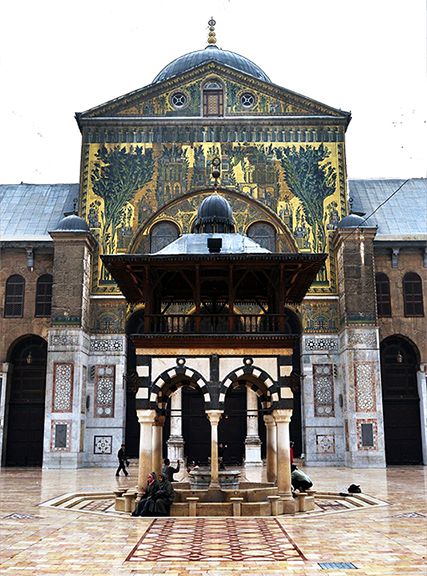
The Umayyad Mosque in Damascus, where ‘Abd al-Ghanī al-Nābulsī regularly taught
Besides al-Nābulsī, another Ottoman scholar who criticized the Kadızâdeli zealotry was the aforementioned Kâtip Çelebi. We have already seen his comments on how Sultan Murad IV’s brutal bans on tobacco proved disastrous—and counterproductive, because, as he wrote, “Men desire what is forbidden.” In the same book, The Balance of Truth, Kâtip Çelebi also took on the obsession to eradicate bid‘ah. After reminding readers that “innovations” could be good or bad—a nuance long noted by many religious scholars—he offered a sociological argument for not interfering with any of them:
All we wish to say is this: these innovations are all firmly based on custom and habit. Once an innovation has taken root and become established in a community, it is the height of stupidity and ignorance to invoke the principle of “enjoining right and forbidding wrong” and to hope to constrain the people to abandon it. People will not give up anything to which they have grown accustomed, whether it be Sunna or innovation, unless some man of blood massacre them all. The Sunnite sultans, for example, have fought many wars and battles over innovations in doctrine, but to no avail.43
So what had to be done? Referring to the controversy over tobacco as an example, Kâtip Çelebi praised “God-fearing men who themselves piously refrain, but do not interfere with smokers.”44 So piety was a beautiful thing when personally exercised—but it was not to be imposed on others. “The best course,” he concluded, “is not to interfere with anyone.”45 And noninterference, he explained, should be a key religious principle in Muslim society:
For the rulers, what is necessary is to protect the Muslim social order and to maintain the obligations and principles of Islam among the people. As for the preachers, they will have done their duty if they gently admonish and advise the people to turn towards the Sunna and to beware of innovation. The duty of complying belongs to the people; they cannot be forced to comply.46
This was really a remarkable comment by a seventeenth-century Ottoman Muslim scholar, anticipating what Pope John Paul II would proclaim in the late twentieth century: religion should be “proposed, not imposed.”47 It was also a reaffirmation of that remarkable Qur’anic maxim, “No compulsion in religion,” in its fullest meaning.
Meanwhile, Kâtip Çelebi’s comment on the duties of Muslim rulers—to “protect the Muslim social order and to maintain the obligations and principles of Islam among the people”—makes clear that he was not advocating a secular state, which would be anachronistic for any classical Ottoman scholar. Yet his emphasis on the perils of state-imposed piety indicates an appreciation for a measure of separation between state power and religious faith and practice, and an early nod to what we now term “religious freedom.” At the community level, this freedom was already embodied in the Ottoman Empire’s renowned millet system, which granted Christian and Jewish “nations” autonomy to practice their faith traditions. Through his critique of the Kadızâdeli campaigns, Kâtip Çelebi added something more: sparing individuals within the Muslim community from the violent enforcement of particular Islamic doctrines.
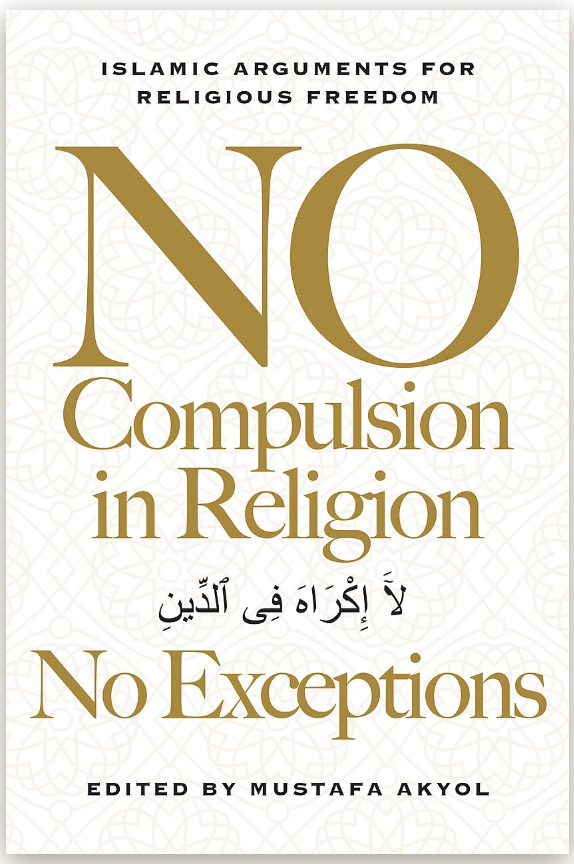
Mustafa Akyol is the editor of the book No Compulsion in Religion—No Exceptions: Islamic Arguments for Religious Freedom (Cato Institute, 2026), from which this essay is adapted.
PurchaseBefore turning the page on this seventeenth-century Ottoman episode of religious coercion, another aspect of it is worth stressing: it caused much tension, division, hatred, and violence among Muslims of the empire. Had the Kadızâdelis merely preached their views, bitter fights would have been avoided, and many lives would have been saved. The differing sides could even have learned a few things from each other. But self-righteous zealotry made this live-and-let-live solution impossible.
The ever-wise Kâtip Çelebi pointed to this problem as well:
The most noble Prophet [Muhammad] used to deal kindly and generously with his community. The arrogant men of later time, not seeing the disgrace of running counter to him, label some of the community as infidels, some as heretics, some as profligates, for trifling reasons, without fear of God or shame before His Prophet. They bring the people to the grievous state of fanaticism, and cause dissension. The baseless wrangling in which they engage, with stone-like stupidity, sometimes leads to bloodshed. Most fighting and strife between Muslims arises from this cause.48
It is remarkable—and regrettable—to read these lines almost four hundred years later, because this problem still exists. Even today, in the religious realm, “most fighting and strife between Muslims arises from this cause,” which is self-righteous zealotry. In various corners of the Muslim world, as well as the borderless world of the internet, one can find myriad Islamic groups and individuals who revile other Muslims as “infidels,” “heretics,” or “profligates.” Accusations of kufr (infidelity), riddah (apostasy), zandaqah (clandestine apostasy), sabb (blasphemy), and bid‘ah (heresy) are still weaponized, with a zeal to command the right and forbid the wrong, and with grim consequences: “Conditions in various parts of the Muslim World have deteriorated dangerously,” observes the Marrakesh Declaration of 2016, “due to the use of violence and armed struggle as a tool for settling conflicts and imposing one’s point of view.”49
One Muslim’s “heresy” is another Muslim’s sincerely held truth. Therefore, when suppressing heresy is justified on principle—even when the underlying motive may be political, as is often the case—anyone’s truth can become the next victim. The victim can become the victimizer, and there is nothing to be proud of in that.
I believe that the ultimate remedy to this malaise lies in what ‘Abd al-Ghanī al-Nābulsī and Kâtip Çelebi advised in their time: that preachers of Islam should at most “gently admonish and advise the people,” while granting that people “cannot be forced to comply.” Compliance should only be voluntary, not compulsory.
In other words, the Qur’anic maxim “There is no compulsion in religion” should be neither abrogated nor restricted. Instead, it should be embraced categorically and wholeheartedly, with no exceptions.
Renovatio is free to read online, but you can support our work by buying the print edition or making a donation.
Browse and Buy