
Joshua Lee Harris
Joshua Lee Harris specializes in the philosophy of Saint Thomas Aquinas.
More About this Author
Joshua Lee Harris specializes in the philosophy of Saint Thomas Aquinas.
More About this Author
Joshua Lee Harris specializes in the philosophy of Saint Thomas Aquinas.
More About this Author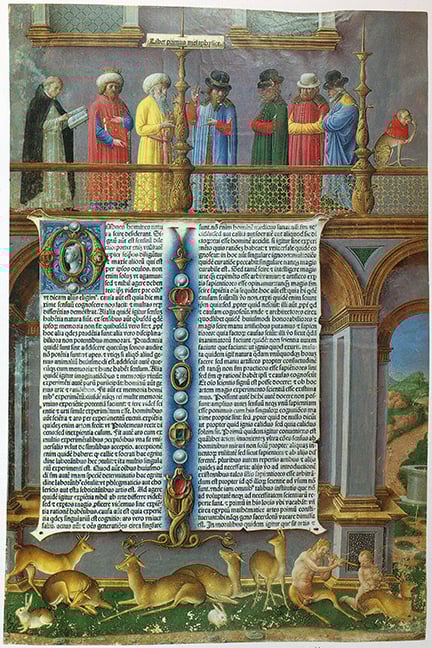
The beginning of Aristotle’s “Metaphysics,” showing philosophers in conversation, with an ape at right, as a counterpole, 1483
The intellectual legacy of Abrahamic religion is incomplete without natural theology, the soft-boundaried yet discernible enterprise of rational inquiry about the existence and nature of God, and indeed the natural world insofar as it is related to God. Arguments from (for example) Ibn Sīnā, Anselm, Ghazālī, and Aquinas enjoy regular attention even in contemporary philosophy of religion—so much so that it is difficult to imagine the discipline without them. But even if natural theology has always faced critics “from the inside” of the traditions for which it is ostensibly a servant, in secular Western democracies today its principal foil is surely naturalism, the view that “reality is exhausted by nature, containing nothing ‘supernatural.’”1 On naturalism, it’s not just that arguments of the abovementioned sort are unsound; it’s that the very methods of natural theology must be rejected, especially insofar as they involve appeals to evidentiary standards that lie beyond the remit of the empirical sciences.2 While debates do rage in subfields such as metaphysics and the philosophy of religion, naturalism enjoys preeminence in anglophone philosophy departments writ large, having achieved the rare feat of persuading a sizable majority of philosophers.3 Naturalism is its own traditio, with which mainstream philosophical and scientific academies are entrusted to hand on to their students. In these institutions, naturalism is not just a reflective answer to certain questions of metaphysics or the philosophy of science but also something like a broader academic “paradigm.”4 Naturalism is “how things are done around here.”
My purposes herein do not concern the soundness of particular arguments in natural theology, though perhaps it is not so inconspicuous that I do hold many of them in high regard. Instead, I want to ask and attempt to answer another question—one that pertains to naturalism as a paradigm of intellectual culture: Is naturalism ideology?
Some preliminaries first. By “ideology,” I do not mean some abstract idea or system of ideas that is independent from and innocent of the social lives of those who might consider its merits in a seminar room. I mean instead something like what Karl Marx meant when he spoke of a “German ideology”—that is, an institutionally dominant “production of ideas, of conceptions, of [false] consciousness”5 that is systematically ordered toward the legitimation of the concrete social relations of a given historical moment. Ideology in this pejorative sense involves two specific, signature misrepresentations: (1) a misrepresentation of what is really only in the interest of a particular social group as being in the interests of people in general, and (2) a misrepresentation of what is contingent and historically specific as though it were necessary. To use Brian Leiter’s terms, these are the “Interests Mistake” and the “Necessity Mistake,” respectively.6 Ideology always involves certain core false or unwarranted judgments that are implied in these two signature misrepresentations. The interesting thing is not just that ideologies misrepresent—it’s how they misrepresent.
I think that the case for the ideological character of naturalism turns out to be rather surprisingly strong. Although critics of naturalism tend to be skittish of such claims about ideology given certain commitments of their progenitor, one need not be some sort of committed “historical materialist” to see the point here: if it is possible for institutionally dominant ideas to misrepresent in these socially relevant ways—and surely it is—then something like ideology in the Marxian sense is possible and perhaps even likely. For naturalism, the shoe fits surprisingly well.
First things first: ideology gives shape not just to any consciousness, but false consciousness. Does naturalism satisfy this description? In an admirably frank paper published recently in the journal Philosophy, Thomas Raleigh offers some reasons to think so:
I used to spend a fair amount of time thinking and worrying about naturalism. In particular, I used to think it was an important philosophical question.… [But] “naturalism” is really no more than an empty term of approbation that philosophers tend to bestow on theories that they find plausible and withhold from those they find implausible. The methodological moral I suggest we draw is that we should just stop talking about naturalism entirely—at least when doing serious first-order theorising in philosophy.7
Why this deconversion? I won’t rehash the entirety of Raleigh’s argument (which is worth reading in full), but it’s worth emphasizing a couple of salient points.
If by “naturalism” we mean the metaphysical thesis that only natural things exist, then it is hard to see what the descriptor “natural” adds to our understanding of anything, or even what it would mean to hold the opposite, “supernaturalist” view. To illustrate, Raleigh asks us to consider a thought experiment involving some future, credibly scientific, empirical discovery of real, causally efficacious ghosts. Much to our surprise, the thought goes, these ghosts have turned out to be observable and to have certain bizarre properties that do not fit well with our previous understanding of the natural world. What would a card-carrying naturalist’s response to this surprising discovery be? Would it count as evidence against naturalism as a metaphysical thesis?
It seems like it should, since one of the principal motivations for being a naturalist in the first place is to exclude “weird,” “spooky,” or “immaterial” things from one’s world. Yet, as Raleigh notes, were this to happen, “there would not be any point in asking whether ghosts are ‘natural’ or ‘supernatural’.… Once we admit that they are part of reality, what further possible theoretical interest would be served by asserting or denying that they are part of ‘nature’?”8 In other words, would we take such a discovery to falsify naturalism, or would we take it as a particularly surprising broadening of our conception of what constitutes the natural world?9 Raleigh’s point is that there is no good way to tell and, thus, naturalism as a metaphysical thesis is fatuous. Unless we have in advance some specifying and thus limiting conditions for what counts as “natural,” naturalism as a metaphysical thesis has no content or real claim on anything. It’s empty.
But a more lightweight, “methodological” (as opposed to metaphysical) conception of naturalism fares no better, according to Raleigh. If naturalism simply means (for example) that “scientific inquiry is our only legitimate form of inquiry,”10 then we’ve relieved the burden from the term “natural” only by shifting it rather conspicuously to the term “scientific.” But of course the so-called demarcation problem (i.e., the problem of demarcating scientific from nonscientific theories in a principled way) in the philosophy of science is notoriously difficult. Broad appeals to empirical access or observation will not do the trick, since many credibly physical theories, including the most successful ones, regularly reference non-observable entities. Indeed, as Raleigh points out, Isaac Newton’s theory of gravitation was initially rejected on account of its failure to limit itself to certain “mechanistic” accounts of causal explanation. It was a “spooky” theory, even though we recognize it today as among the greatest of all scientific discoveries.11 And the situation becomes even more hopeless when considering the science of mathematics, whose proper subject matter arguably involves few if any observables at all. In other words, if Newtonian physics and modern mathematics don’t get to count as sciences, then we need to rethink our criteria.
All in all, methodological naturalism does not seem to fare much better than its brasher metaphysical counterpart.12 As Bradley Monton puts it in a widely cited essay,
If science really is permanently committed to methodological naturalism, it follows that the aim of science is not generating true theories. Instead, the aim of science would be something like: generating the best theories that can be formulated subject to the restriction that the theories are naturalistic.… I maintain that science is better off without being shackled by methodological naturalism.13
It should be pretty clear what the point is here: naturalism faces very serious challenges, not just with respect to its truth or warrant, but even with respect to its meaningfulness as a paradigm. Naturalism has an “emptiness” problem. But does it have an ideology problem as well?
Recall that falsity or emptiness of certain core judgments is only a necessary condition for ideology. If a given cluster of ideas is to be considered ideological, it must also involve certain characteristic kinds of misrepresentation. One of these misrepresentations is the “Necessity Mistake,” the treatment of some historically contingent phenomenon as though it were a necessary, perennial feature of human history. Does naturalism make the Necessity Mistake?
As it happens, something like this very thesis is given an extraordinarily thorough defense in Peter Harrison’s excellent new book, Some New World.14 Harrison notes that “naturalism” as a term of art does not arise as a self-conscious paradigm until the nineteenth century in Britain. A paradigmatic figure here is Thomas Henry Huxley, a staunch public advocate for a self-described “scientific naturalist” interpretation of Darwinian theory whose 1892 Essays upon Some Controverted Questions is worth quoting at length:
From the earliest times of which we have any knowledge, Naturalism and Supernaturalism have consciously, or unconsciously, competed and struggled with one another.… These records inform us that, so far as men have paid attention to Nature, they have been rewarded for their pains. They have developed the Arts which have furnished the conditions of civilised existence; and the Sciences, which have been a progressive revelation of reality and have afforded the best discipline of the mind in the methods of discovering truth.… [Supernaturalists] tell us of the attributes of supernatural beings, of their relations with Nature, and of the operations by which their interference with the ordinary course of events can be secured or averted. It does not appear, however, that supernaturalists have attained to any agreement about these matters, or that history indicates a widening of the influence of supernaturalism on practice, with the onward flow of time.15
According to Huxley, naturalists “pay attention to Nature” and are rewarded with knowledge accordingly, driving the progress of human history in the process. By contrast, supernaturalists merely speak of “interferences with the ordinary” and their purportedly supernatural causes. Not only that, the two are foes who have competed with each other “from the earliest times.” As Harrison notes, the narrative is still repeated today in Introduction to Philosophy classes with considerable regularity: Western philosophy was, is, and will be a naturalist enterprise—one that begins with so-called pre-Socratic theorists in Greece—and that is what makes it different from religious or otherwise supernaturalist discourse.
But this is pure fabrication. As Harrison points out—and as anyone who bothers to consult pre-Socratic texts should know—there is no evidence that these authors worked consciously with anything like the distinction between “natural” and “supernatural.” Indeed, for nearly all pre-Socratic philosophers (e.g., Heraclitus, Parmenides, Anaxoragas, Pythagoras, among many others), the very intelligibility and coherence of any “ordinary course of events” required recourse to transcendent, immaterial, or (frankly) divine explanations.16 These philosophers understood themselves as reflecting on the very conditions upon which the impressive unity and regularity of “Nature” must rest. They were natural theologians, in short, and were we to ask them whether (for example) divine nous was a natural or supernatural phenomenon, they would not have known what we were asking about.
And it’s not as though this story gets any more plausible when we consider the legacies of Plato and Aristotle. Is “the Good beyond being” natural or supernatural? What about the Unmoved Mover? Again: it simply does not make sense to ask such things, because these philosophers did not work with any such distinction.17
Even luminaries and interpreters of the modern Scientific Revolution such as Kepler, Newton, and Clarke held as a matter of consensus that the laws undergirding the unity and regularity of nature cried out for explanation in terms of “the Arbitrary Will and Pleasure of God exerting itself and acting upon Matter continually.”18 This left little room for the intelligibility of any purported naturalist-supernaturalist divide. If anything, it would be more accurate to say that these men of science conceived of the laws of nature themselves as supernatural. They read much more like the Ghazālī of the Tahāfut than Richard Dawkins.19
What Harrison shows is that nineteenth-century British thinkers like Huxley—motivated by a desire to wrest control of mainstream scientific institutions from the Church of England—imagined the naturalist-supernaturalist narrative accordingly:
In one of the great ironies of the history of ideas, a notion [i.e., laws of nature] that had originally been understood as constituting irrefutable evidence of God’s ongoing activity in nature was now posited as evidence for the exact opposite, for its impossibility.… The 19th-century reversal of the theological valence of laws of nature was a remarkable accomplishment. A good part of what made it possible was a retelling of the history of science in a way that concealed the contributions of theological considerations and realigned scientific innovation with an imagined perennial naturalism.20
Huxley was not just spearheading a novel theory of scientific understanding. By “naturalizing” laws of nature, Huxley and other British naturalists were proposing a revolutionary vision, complete with a founding myth and immediate implications for a utopian future for institutions of science and philosophy. It was an amazing achievement, in other words, though precisely not on account of its historical or philosophical scrupulousness. If a perennial naturalist-supernaturalist divide didn’t exist—and it didn’t for the overwhelming majority of the history of science—someone would have to invent it. And that is exactly what Huxley and other naturalists did.
For our purposes, it is enough to recognize that, as the genre of Necessity Mistakes goes, Huxley’s is a howler. To the extent that naturalists retell the story, it remains a misrepresentation. The truth is, as Émile Durkheim put it, “the idea of the supernatural”—and thus the naturalist-supernaturalist divide—“arrived only yesterday.”21
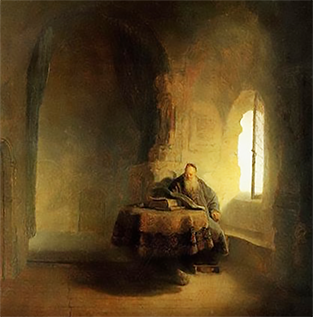
Philosopher Reading, Rembrandt, 1631
But even if we agree that naturalism is dubious as a theory and commits a Necessity Mistake, it might still not satisfy the abovementioned conditions for ideology. For that, another sort of misrepresentation must occur: the Interests Mistake. An ideology also misrepresents one social group’s interests as the “general interest.”
The canonical example of the Interests Mistake in Marx is what he took to be a post hoc rationalization of the ostensive “purpose” of the French Revolution as the aspirational pursuit of personal and property rights for a newly ascendant merchant class of a radically reshaped French society.22 While such rights were surely “nice-to-haves” for the many rural peasant and urban working classes fighting in the revolution, it’s not at all clear that this was anything like their “purpose.” In this case, the interests of this ascendant bourgeoisie were misrepresented as the general interest.
As it happens, the short history of naturalism betrays a suspiciously similar alignment with particular social groups in secular Western democracies. Indeed, even the avowedly atheistic Marx himself was sharply critical of nineteenth-century British materialism. The Marxist philosopher Erich Fromm elaborates:
Marx actually took a firm position against a philosophical materialism which was current among many of the most progressive thinkers (especially natural scientists) of his time. This materialism claimed that “the” substratum of all mental and spiritual phenomena was to be found in matter and material processes. In its most vulgar and superficial form, this kind of materialism taught that feelings and ideas are sufficiently explained as results of chemical bodily processes, and “thought is to the brain what urine is to the kidneys.” Marx fought this type of mechanical, “bourgeois” materialism.23
The point here is not to regurgitate Marx’s thought but to see the connection between naturalism and ideology. In his time and our own, it is not so small a matter to consider the institutional instantiation of such ideas. Beyond the philosophers who work explicitly under the auspices of the paradigm today, the self-perception of other so-called knowledge workers in contemporary Western societies more broadly (e.g., scientists24 and journalists25) is informed significantly by opposition to “the supernatural” and its significance in human life. As the physicist and popular science writer Sean Carroll puts it, “Four centuries of scientific progress have convinced most professional philosophers and scientists of the validity of naturalism.”26
It seems irresponsible to treat this alignment as an accident. After all, it is the stated commitment of influential naturalists to reconcile the so-called manifest image of persons and things living and acting in the world to the “scientific image” of fermions, bosons, and other postulates of mathematicized physical theories.27 To the extent that naturalism is dominant in institutions of knowledge production, there is a sense in which it is quite literally the business of people in these industries to explain what is dearest to most people in terms that are mostly or entirely alien to them. To the extent that it was founded on promises of emancipation—from nature, as well as from others who claim access to an invisible world of law—such a naturalistic program has arguably “become its own opposite”: an agent of alienation, not progress.28
The contemporary discipline of cognitive science is a particularly powerful expression of this tendency. The great philosopher and progenitor of cognitive science Jerry Fodor, writing with Zenon Pylyshyn, is refreshingly honest about what he identifies as the field’s “assumption” of naturalism:
There are plausible grounds for arguing that naturalism rules out the kind of cognitive psychology that… takes believing, intending, and the like to be content-bearing states that are bona fide causes of behavior.… Our kind of cognitive science wants [such mental states] to be causes of behavior, but naturalism wants propositions not to be causes of anything; so perhaps we can’t have what we want. It wouldn’t be the first time.29
It’s difficult to argue with Fodor’s claim about “what we want”—namely, a world populated in part by minds that intend attentively, understand intelligently, and decide responsibly, among other things. Considerations of the abovementioned emptiness of naturalism aside, what is striking here is the direct admission of a divergence in wants: we human practitioners of commonsense or “folk” psychology—presumably—want to think that there really are intentions, beliefs, and decisions that play a consequential role in our most humane aspirations and courses of action.30 But naturalism “wants” the opposite and, thus, presumably, so do those whose reputation depends on their contribution to knowledge production in a naturalist paradigm.
Fodor himself was actually quite respectful of commonsense or “folk” psychology as a theoretically serious language of inquiry. He even held that a thoroughgoing eliminative materialism about mental states would be “the greatest intellectual catastrophe in the history of our species.”31 But this makes it all the more remarkable that we don’t need to stray too far beyond Fodor’s own words to see a divergence of interests between those working in the paradigm of this sort of naturalistic cognitive science and, well, the rest of that abovementioned “we” to whom he refers so bluntly.
This is an Interests Mistake. If naturalism—an “assumption,” recall—demands that the enduring mystery of our rationality is something to be hashed out between (for example) those who think we’re Turing machines and others who think we’re neural networks,32 it’s difficult to avoid implication of alienation from what “we” take to be moral and spiritual dimensions of ourselves. On naturalism, the debate isn’t even about whether the human mind is a machine—it’s about what kind of machine it is.
And it’s not just cognitive science. I already mentioned the eradication of (real, governing) laws of nature that were ironically required for the emergence of naturalism. And of course the avowedly anti-religious character of the naturalist paradigm is obvious. In a world in which “transcendence”33 remains demonstrably critical for the flourishing of (at least) the vast majority of people outside of such institutions, it is difficult to imagine a situation in which the interests of these groups could be less well aligned. Consider the unlovely treatment of the following questions by naturalist philosopher Alex Rosenberg against the backdrop of what we know about the relationship between meaning and happiness:34
Is there a God? No.
What is the nature of reality? What physics says it is.
What is the purpose of the universe? There is none.
What is the meaning of life? Ditto.
Why am I here? Just dumb luck.
Bertrand Russell concurs:
That Man is the product of causes which had no prevision of the end they were achieving; that his origin, his growth, his hopes and fears, his loves and his beliefs, are but the outcome of accidental collocations of atoms.… Only within the scaffolding of these truths, only on the firm foundation of unyielding despair, can the soul’s habitation henceforth be safely built.35
It’s one thing to note that the self-assuredness of these philosophers is grossly misplaced, given naturalism’s abovementioned emptiness problem. But surely it’s more important to note that, if “progress” in this sort of paradigm is in anyone’s interests—which is doubtful enough—the overwhelming majority report of the intellectual legacies of humanity’s greatest moral and spiritual traditions testifies that it is not in the interests of most.36 Human beings seek lives of ultimate significance, of overall coherence, and of purpose.37 Each of us “is questioned by life,” and we “only respond by being responsible.”38 If the response of naturalism’s brightest luminaries is to reject this dearest, most humane responsibility as illusory, the conclusion seems difficult to avoid: naturalism is indeed guilty of a rather egregious Interests Mistake—and thus of ideology.
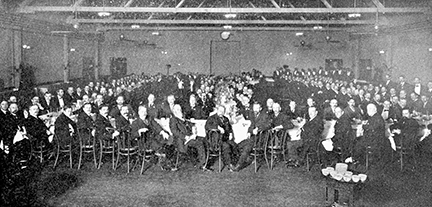
Dinner of the American Society of Naturalists, 1907
If naturalism were a substantive, evidentially compelling thesis in metaphysics or the philosophy of science; if it were a perennial driver of scientific progress from time immemorial; if it were true that unyielding despair is the only safe “habitation” for the human soul; then perhaps it would be a noble, courageous project to adopt for ourselves. But naturalism is none of these things. It does have an emptiness problem. It does systematically misrepresent its origins and staying power as a paradigm. And its effects are profoundly alienating for the vast majority of—if not all—wayfaring souls. It’s ideological.
We inheritors of the tradition of natural theology have our work cut out for us. The sciences, ancient and modern alike, are among the greatest achievements of our common humanity. And it is because of this—not despite it—that we should work to integrate them into an alternative vision, one that is intelligible by the horizon of a sophia that can accommodate what is highest and most original in us. This is an ambitious project, of course, and there is perhaps no way to see in advance what it would look like.39 But at least there is progress to be made in recognizing that the shackles of naturalism are anything but necessary. If any form of inquiry does have a credible claim to perennial status; if we can conceive of goods in which we all have an interest just insofar as we are human; if the proliferation of the sciences does testify to a dappled world of irreducibly diverse yet harmonious and intelligible order; then surely it is natural theology and not naturalism that is the more compelling enterprise. After all, as Thomas Aquinas put it eloquently, “Just as the sun is said to be the cause of the manifestation of colors, inasmuch as it gives and preserves the light by which colors are made manifest… it follows that in all things God works intimately.”40