
John Walbridge
John Walbridge is a Near Eastern languages and cultures professor at Indiana University Bloomington.
More About this Author
John Walbridge is a Near Eastern languages and cultures professor at Indiana University Bloomington.
More About this Author
John Walbridge is a Near Eastern languages and cultures professor at Indiana University Bloomington.
More About this Author
The Parable of the Rich Fool, Rembrandt, 1627
Jesus said, “The poor ye always have with you,” but he might have added, “and also the rich,” for in our day the rich have become richer and more powerful—and most unlikely to go away. Leaving aside for the moment the economic benefits that apologists for unchecked capitalism assure us come drifting down from the heights of wealth, what should the obligations of wealth be?
The ethical obligations of wealth and power are precisely the concern of a neglected section of Aristotle’s Nicomachean Ethics, a book that shows Aristotle at his best—systematic and commonsensical. Anyone who takes the time to read Aristotle carefully will regularly be startled by some unexpected digression or incongruous lurch from his usually relentless flow of argument. The incongruous text I consider here consists of several pages discussing magnificence, the virtue concerned with the proper use of great wealth, and rightful pride, the proper attitude toward honor on the part of one occupying a high position.1 We might roughly render these virtues as “philanthropy” and “dignity,” respectively. In the Nicomachean Ethics, Aristotle, having laid out the basic assumptions of his ethics, that the goal of an ethical life is the flourishing of human beings as human beings, then proceeds to lay out three fundamental virtues, each of which is a mean between excess and deficiency in fundamental human drives. For instance, courage, the virtue related to fear, is the mean between the excess, which is rashness, and the deficiency, cowardice. Temperance is the mean in relation to pleasure, whose excess is hedonism and whose deficiency, which not surprisingly lacks a good term in Greek, Aristotle calls “insensibility.” Generosity, or liberality, the virtue related to the giving and taking of wealth (and more generally, whatever can be valued by money), is in excess wastefulness, or prodigality, and in deficiency stinginess. As will be mentioned later, in each case the mean is actually closer to one of the extremes.
And then come magnificence and pride. Suddenly Aristotle is using examples like fitting out a trireme, paying for a diplomatic delegation, speaking in a deep voice, and dressing the chorus of a comedy in purple robes, this last an expensive and apparently characteristically Megarian offense against good taste. Several pages later he reverts to more conventional ethical topics.
So what is going on? On a superficial level, this discussion is typical of Aristotle, a biologist at heart. He goes about creating a theory by collecting and trying to classify examples—in this case, examples of virtues and problems relating to human behavior, excellence, and moral failings—and then devising a comprehensive theory to take account of these examples. Magnificence, which involves the proper use of great wealth, and pride, which involves attitudes toward honor, are examples of human behavior and excellence, so into the theory they go, along with other assorted virtues and related topics like friendliness, shame, and the intellectual virtues that he will discuss in the following parts of the book.
It is Thomas Aquinas who, with his usual talent for making Aristotle make systematic sense, explains why these two virtues and their corresponding vices are not out of place and how they fit into Aristotle’s system of virtue ethics.2 The question arises in Thomas’s discussion of whether the moral virtues are necessarily connected. Aristotle himself had pointed out that while a poor man may be virtuous, he cannot be magnificent or proud because he does not have wealth (in the first case) or high position (in the second). It would seem, then, that at least these two virtues are separate from the virtues that everyone, high or low, should strive to acquire. Thomas replies that while these two virtues are conditioned on a certain state of life and are thus not attainable by a poor man, a poor man who practices the lesser virtue of generosity is nevertheless prepared to acquire these greater virtues very easily should his station in life change—by winning the lottery, say, or becoming unexpectedly famous. This poor man is like the geometer, says Thomas, who needs only a little study to acquire a more difficult theorem. This distinction between greater and lesser virtues is similar to the distinction in Islamic law between individual and collective obligations: each person must pray, but if someone takes the office of judge or prince, specific legal obligations then fall upon him, while others are excused from those responsibilities.
In short, what Aristotle has done is outline an ethic for the rich and powerful. I will consider the obligations of each group in turn.
The Greek word that Aristotle uses to describe the proper use of great wealth is megaloprepeia, a compound formed from words meaning “great” and “befitting.” It is usually translated as “magnificence,” a word whose etymology and connotation are close to the Greek.3 But at least one translator renders it as “munificence,” which is closer to Aristotle’s definition of megaloprepeia as “fitting expenditure involving largeness of scale” but which misses the connotation of impressiveness.4 Isĥāq ibn Ĥunayn’s Arabic rendering is karam, which carries senses of both generosity and nobility.5 The more modest cousin of magnificence is generosity, the appropriate taking and giving of things having monetary value.6 A generous person acquires his wealth honestly and gives the right amount to the right people. A liberal merchant, for example, would buy and sell at fair prices and give to those worthy of his generosity, but he is not considered magnificent even if collectively his gifts amount to a substantial sum. Someone is magnificent if he uses his wealth to do great things, especially to benefit the public but also to observe his own major life events, like throwing a wedding or building a great house. In either case, how he acquired his wealth, the “taking” part of liberality, is not relevant, since Aristotle is clear that magnificence only concerns spending. The point is that “for the sake of the noble... the result should be worthy of the expense, and the expense should be worthy of the result, or should even exceed it.”7
Aristotle has not forgotten his doctrine of the mean. The deficiency with respect to great wealth is niggardliness, and the excess is vulgarity. The latter is characterized by excess expenditure on unworthy objects for the sake of showing off the rich man’s wealth. To take a modern example, one aspiring billionaire observed to a journalist that the length of one’s yacht is a convenient way of indicating the extent of one’s wealth, given that the wealth of even a centimillionaire far exceeds any practical use. The niggardly man, on the other hand, while he may be compelled by circumstance to spend his money on great objects, does so grudgingly and may stint on expense, causing the result to be less perfect than it ought to have been. This, Aristotle thinks, is a worse vice than vulgarity, which harms no one else. The mean, he thinks, is in this case closer to the extreme of vulgarity. A hundred-meter yacht at least provides jobs for shipwrights and crew, however absurd it might seem to a thoughtful observer seeing it, as I have, sitting tied up in a harbor, depreciating faster than charter fees can compensate.
“Pride” here renders megalopsychia, though translators also render Aristotle’s term for this proper attitude toward honor as “high-minded,” “magnanimity,” or literally “greatness of soul.”8 The Greek term does not have negative connotations. Aristotle defines the proud man as one “who thinks himself worthy of great things, being worthy of them.”9 The proud man’s chief concern is honor, since honor is the greatest external good. It would be absurd to think that someone worthy of great things was morally deficient—a coward or unjust, for example—so the rightfully proud man must be a truly good man. The law of the mean applies to pride as well, since one who thinks himself worthy of great things when he is not is vain or hubristic, but one who is in fact worthy of great things but does not think himself so is unduly humble. Being chiefly concerned with honor, a proud man can calmly face good and bad fortune and be moderate in relation to wealth and power. He does not court danger, nor does he flee from it. He likes to give benefits but not to receive them. He does not like to speak or hear of the good he has done, for he does not like or trust flatterers. He is open about his hates and loves, but he does not hold petty grudges. He speaks in a deep and dignified voice and walks slowly, since few things concern him enough to excite him.
Aristocrats, the powerful, and the wealthy are all thought to be honorable and proud, both by themselves and by others, but Aristotle insists that only the truly good can be rightfully proud. In actuality, when they are not accompanied by true virtue, positions of power lead to haughtiness and snobbery. The merely powerful and others who wrongly think themselves worthy of honor are vain and foolish. However, those who think themselves less worthy than they are, though they are not evil, deprive themselves of what they deserve. This deficiency, Aristotle thinks, is worse than vanity because it shows a lack of self-knowledge while depriving such a timid person of the worldly goods that he deserves. Thomas explains this last point by saying that timidity is worse than vanity because it leads a timid person to fail to do deeds of virtue that he is in fact capable of.
The obvious context of Aristotle’s theory of the ethical obligations of the rich and powerful was the Greek monarchies and city-states. He was from northern Greece, where his father was the court physician of the king of Macedon. He studied with Plato in Athens in the period of squabbling city-states following the Peloponnesian War and returned to Macedon to tutor the young Alexander the Great. By the time he returned to Athens and established his own school, Athens was firmly under the thumb of Macedon. Thus, between the aristocratic classmates and students he encountered in Athens, the less polished aristocrats in Macedon, Plato’s teachings on politics, and his own research, Aristotle had ample opportunity to learn the foibles and failings of the rich and powerful.
Aristotle’s great man, as for convenience we can call the one who combines magnificence and legitimate pride, is a man of the world. Whether he is born into privilege or acquires wealth, honor, or both by his own efforts, his duty is to use them responsibly and in accordance with his station. If he is called upon to outfit a trireme, sponsor a chorus, or pay the costs of a diplomatic mission—three “liturgies” that a rich Athenian could be compelled to pay for—he should do so cheerfully and with excellence. The trireme, we may suppose, should not only be well built but also have such embellishments as befit the station of the donor and the glory of the city—perhaps some elegant carvings on the bow and stern with expensive paint and a touch of gold leaf. However, the great man should not live a life of dreary devotion to duty; he should build himself a house whose stateliness befits his station and mark the major events of his personal life—marriages and funerals—with equal pomp. Better, in fact, to go overboard with display rather than to timidly withdraw from the world. And, of course, his personal character and dignity should be impeccable—a proper British gentleman, as it were.
Not everybody liked these ideas. For Aristotle’s teacher, Plato, guardians and philosopher-kings should be servants of the city, not wealthy men living in luxurious homes. Even Odysseus in the Myth of Er that ends Plato’s Republic chooses to be reborn as an obscure private man. Later, Epicureans would reject Aristotle’s call for involvement in the world, while Marcus Aurelius, the Stoic emperor of Rome, embraced a soul-crushing devotion to dreary duty (when he would have much preferred to be reading in an Epicurean garden). Christianity and Islam, too, would distrust wealth, though each made a wary peace with it, and both would dismiss pride as a sin. And, of course, the rich and the powerful throughout time have rejected the expense and self-restraint required of public virtue. Modern Aristotelian scholars have also largely ignored Aristotle’s discussion of magnificence and pride, probably because they were topics of lesser philosophical interest and because academic philosophers these days seldom mingle with the great men of their time. W. D. Ross, an ethicist and a major Aristotelian scholar of the twentieth century, dismissed Aristotle’s account of magnificence and pride: “The passage simply betrays somewhat nakedly the self-absorption which is the bad side of Aristotle’s ethics.”10
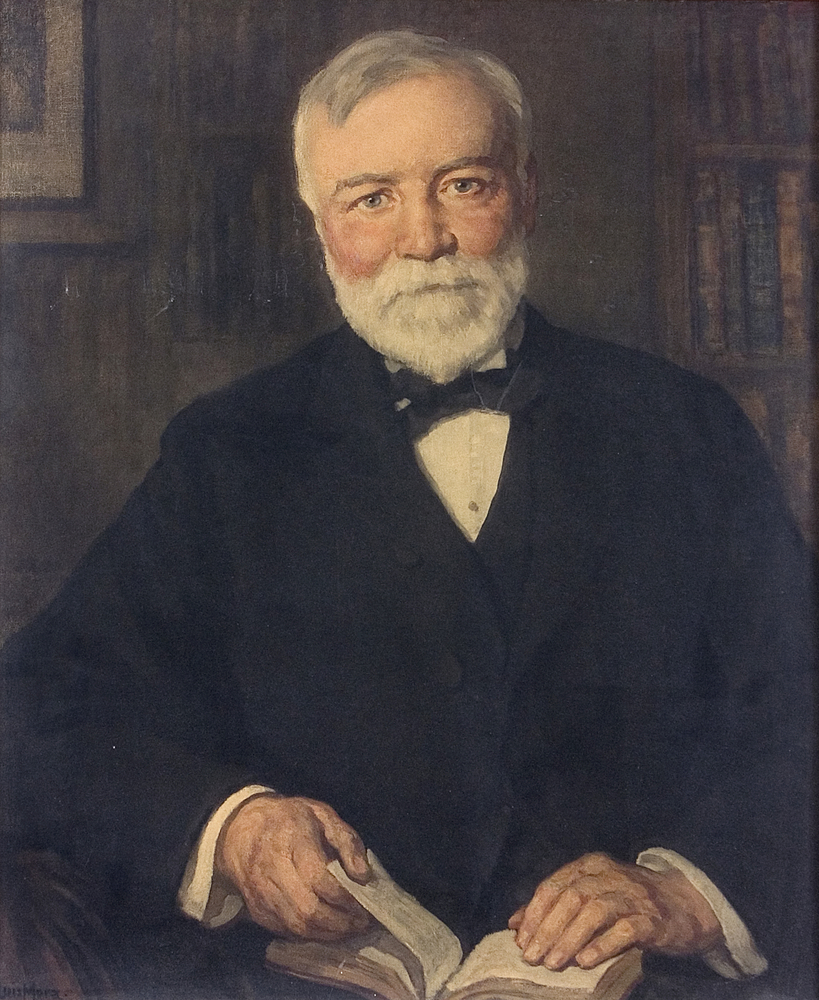
Andrew Carnegie
Inequality of wealth and power has only increased since Aristotle’s time, and this is unlikely to change in the foreseeable future. If anything, the notion of noblesse oblige that Aristotle’s account urges has faded with the growth of enormous inequalities of wealth and the inordinate influence of wealth on politics and the self-regard of the rich. It would be easy enough to fill a list of wealthy and powerful men (and still only occasional women) who exemplify the vices of wealth and pride, but the task of filling up the list I’d rather leave to you. The vulgar, the foolish, and the haughty and vain are easy enough to find; the niggardly and timid rather less so.
Unfortunately, great men who exemplify magnificence and rightful pride are as rare as ever. It is not that there haven’t been some. I grew up in a small town where the cultural center was one of the 2,509 libraries built by the industrialist Andrew Carnegie. The fact that even in a shabby little place like my hometown the Carnegie library was a small but stately building would have won Aristotle’s approval. More recently, the software titan Bill Gates resisted the temptations of philanthropy until his fortune had grown sufficiently to undertake projects of international significance, like disease eradication. Alas, such activities are not characteristic of the rich either in Carnegie’s time or our own. The wealthy are more likely to devote their influence to advancing their own interests, by such measures as reducing taxes on investment income and estates, than to undertaking great things for the public good—and when they do invest in the public good, their own names are usually prominently affixed to the results.
One way of understanding the behavior of the wealthy and powerful is as a symptom of the replacement of communitarian ideals with the exaltation of absolute individual autonomy. The deleterious results in society have been amply documented: the decline of civic institutions like churches and fraternal organizations, the decrease in marriage and childbearing, particularly among the well educated, and a general coarsening of society in the name of self-expression.
Rebalancing the rights of the individual and the needs of the community is a task for a new generation, and it is not a simple one, but changing the role of wealth will need to be part of it. On this topic, Carnegie had something to say. As early as his thirties, Carnegie had resolved to take a salary of only $50,000 a year—modest by the standards of the millionaires of his day—and give away the rest of his wealth before he died. His best-known expression of this philosophy was an article that came to be known as “The Gospel of Wealth,” written in 1889, when he was fifty-three. This article argued that the rich have a duty to use their wealth to benefit society rather than simply passing it down to heirs. Most interesting for our purposes, Carnegie held that the rich could best benefit society by administering their charitable activities themselves rather than simply donating money to charities or the government—very much the practice of magnificence that Aristotle endorsed two millennia earlier.
Well, the rich have mostly not followed Carnegie’s advice, as evidenced by the existence of inherited fortunes, family trusts, a determined effort to reduce or eliminate estate taxes (referred to as “death taxes” to make the program more palatable to the lower orders), tax havens, trickle-down economics, and trust-fund babies. Ought we not as a society, then, insist that great wealth and privilege impose equally great obligations of deed and character and that failure to fulfill those obligations should rightfully bring disgrace and shame? That, of course, would require reestablishing shame as a motivation among the wealthy and powerful. How that might be done is a topic for another day and would need to be the by-product of larger changes in society.
Renovatio is free to read online, but you can support our work by buying the print edition or making a donation.
Browse and Buy